
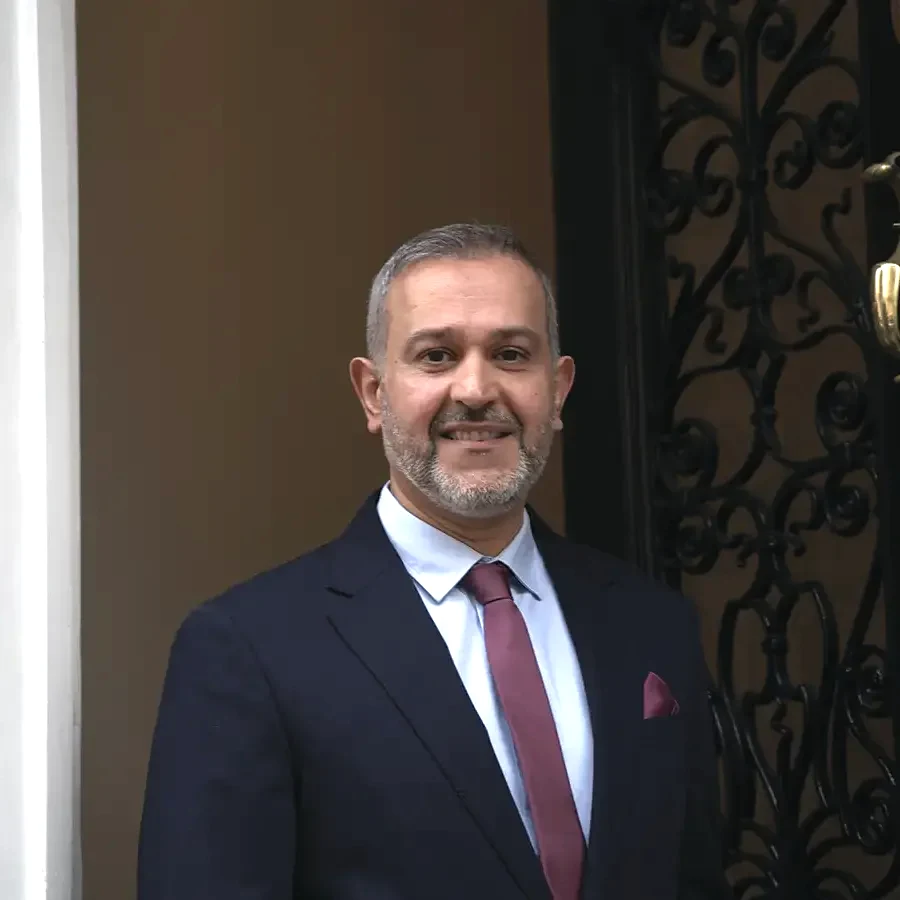
 Dr Omar Ali, consultant interventional cardiologist GMC 4728870
Medical review by Dr Omar Ali: 18 November 2026
What it is
Your heart has four valves: the aortic, mitral, tricuspid and pulmonary valves. They open and close with each heartbeat so that blood flows the right way through the heart and out to the body.
- Stenosis: a valve does not open fully, so the heart has to work harder to pump blood through it
- Regurgitation: a valve does not close properly, so blood leaks backwards, adding strain over time
Symptoms
Breathlessness, tiredness, chest discomfort, dizziness or palpitations. Some people have few or no symptoms at first, and the valve problem is found because of a murmur.
The assessment
An assessment answers three questions: which valve is affected, how severe the problem is, and whether treatment is needed now or the valve can be safely monitored. The key test is an echocardiogram, sometimes a transoesophageal echo for more detail.
Treatment
Many people need regular check-ups rather than treatment straight away. Medicines can ease symptoms. When a valve needs repairing or replacing, Dr Ali works closely with cardiac surgeons and valve specialists so that it happens at the right time.
Questions
What is a heart murmur?
A murmur is an extra whooshing or swishing sound the doctor hears through a stethoscope as blood flows through the heart. Many are harmless (“innocent”) murmurs from normal blood flow, which are common in children, in pregnancy and with a fever. Others come from a heart valve that is narrowed or leaking, or from a hole in the heart.
I have a murmur. Should I worry?
Many murmurs are harmless. An echocardiogram shows whether a valve problem is behind it and, if so, how significant it is.
Will I need surgery?
Not necessarily. Many valve problems are mild and only need monitoring. Dr Ali explains the options and the timing that suits your valve.
Can valve disease get worse?
Some valve problems stay mild for years; others slowly get worse. Regular check-ups with an echocardiogram show how the valve is changing, so any treatment can be planned at the right time.
Want to talk it through? Book a consultation with Dr Ali, or call 020 8087 4742.