
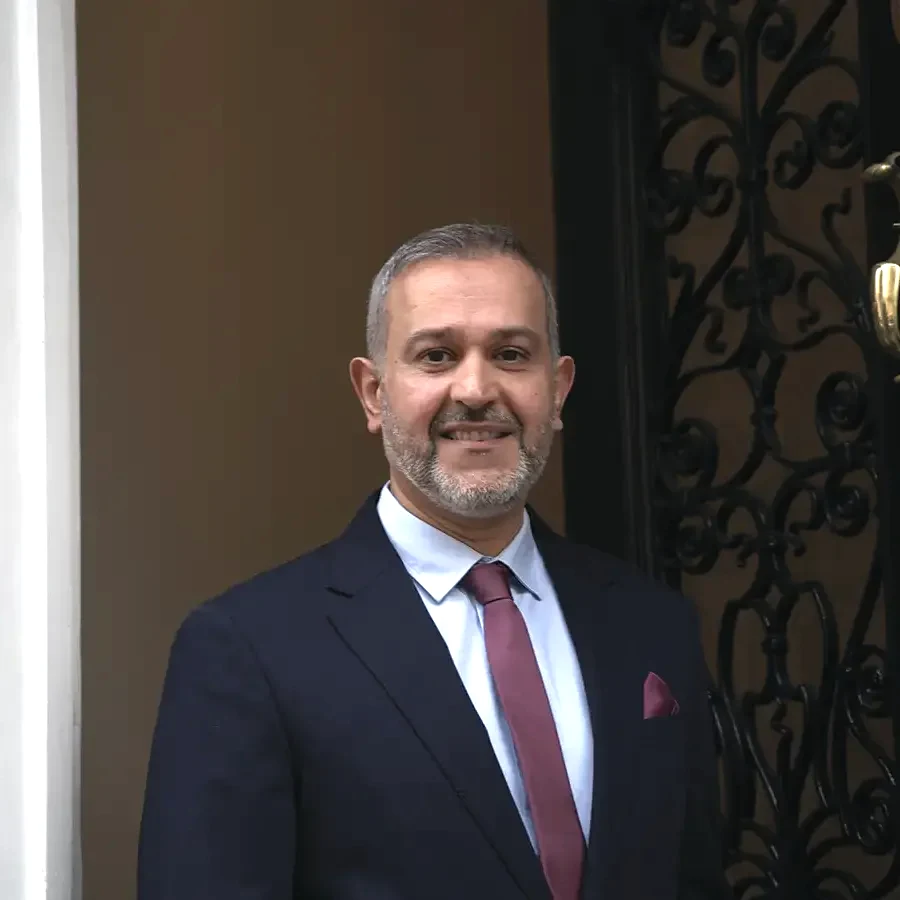
 Dr Omar Ali, consultant interventional cardiologist GMC 4728870
Medical review by Dr Omar Ali: 18 November 2026
Why it is done
To find exactly where any narrowing is and how severe it is, when other tests or your symptoms suggest coronary artery disease. It is also the first step of coronary angioplasty.
What happens
- A local anaesthetic numbs the wrist
- A thin tube (catheter) is guided to the heart using X-ray pictures
- Contrast dye shows the arteries; a warm, flushing feeling is normal
- If a significant narrowing is found, it may be treated with a balloon and stent there and then, if this has been agreed with you beforehand
Dr Ali routinely uses the wrist (radial) approach, which means a lower risk of bleeding and earlier walking than the groin.
Afterwards
A band on the wrist stops any bleeding. Many people go home the same day. You will be given aftercare advice and a contact number, and Dr Ali explains the findings and the next steps.
Risks
Serious complications are rare. Dr Ali discusses the benefits and risks for you personally before the procedure.
Questions
Will I be awake?
Yes. A local anaesthetic numbs the wrist, and you may be offered something to help you relax.
Do I need to stop eating beforehand?
You will be given clear instructions about eating, drinking and your medicines before the day.
How long does it take, and when can I go home?
The test itself usually takes about 30 minutes. You rest for a few hours afterwards, and most people go home the same day. Arrange for someone to take you home.
Sources
Want to talk it through? Book a consultation with Dr Ali, or call 020 8087 4742.