
TESTS
OUTPATIENT DIAGNOSTIC TESTS SERVICES: ACCURATE, QUICK & SPECIFIC
We offer a number of highly specialised and patient-specific diagnostic tests to investigate a wide range of heart symptoms. You will be guided on what is the most appropriate test for you and what information we get from it to make an accurate diagnosis and offer the best possible treatment.
We will talk you through the results of each investigation and what it means in terms of your heart function and its health. Some of the tests will give complimentary information on the state of your heart. We will use this information to give you further advice on how to maintain a healthy heart.
Once you have your consultation you will be informed of the test(s) required to investigate your symptoms. We will arrange many of the tests quickly in the shortest possible time so that you can carry on with your life as normal.

ECG
An electrocardiogram (ECG) is a test that can record the rhythm and electrical activity of your heart to find out if it’s healthy. It is painless and takes 2 to 3 minutes to carry out. An ECG can show different heart problems including:
-
If you’re having a heart attack, or your heart has been damaged by a previous heart attack
-
An enlarged heart that’s under strain
-
Fast, slow or irregular heartbeats called arrhythmias
ECG monitoring
We might advise you to have this type of ECG if you are developing palpitations. You will be asked to wear a small electronic recorder for a day or two. It’s sometimes called a Holter monitor or ambulatory ECG.
If you develop an attack of palpitation whilst you are wearing the monitor you will be advised to record the timing of such an event. The time should be easily visible on the front of the ECG monitor.
![ecg-monitor[1].jpg](https://static.wixstatic.com/media/3fc158_5cbf15c230e7468682e67ba3c2281d2f~mv2.jpg/v1/crop/x_0,y_32,w_125,h_152/fill/w_175,h_212,al_c,lg_1,q_80,enc_avif,quality_auto/ecg-monitor%5B1%5D.jpg)
When you return the device to us 24 or 48 hours later we can analyse your ECG on a computer so that we can correlate your symptoms with any change in your heart rhythm. It usually only takes a maximum 5 minutes to fit the device and a minute or less to remove it. It is completely painless.
Cardiac event recorders. These can record your heartbeat over a longer period of time. There are two main types of recorders. Portable event recorders are devices which you hold up to your chest and turn on when you’re having symptoms.
![1-implantable-loop-recorder[1].jpg](https://static.wixstatic.com/media/3fc158_66a2b5ce541d439cbd7ea37f6f3f4c41~mv2.jpg/v1/crop/x_99,y_0,w_302,h_366/fill/w_390,h_473,al_c,lg_1,q_80,enc_avif,quality_auto/1-implantable-loop-recorder%5B1%5D.jpg)
Implantable Loop Recorder
Implantable/Injectable loop recorders (ILR) are devices placed under the skin on your chest under local anaesthetics. These continuously monitor your heartbeat for up to two years. They can record symptoms that don’t happen very often, such as dizzy spells or fainting. It takes less than 10 minutes to have one of these recorders fitted.
![Doctor_Patient35_HR[1].jpg](https://static.wixstatic.com/media/3fc158_50a1994d717945a99c5b522bd88f135c~mv2.jpg/v1/crop/x_37,y_0,w_225,h_300/fill/w_315,h_419,al_c,lg_1,q_80,enc_avif,quality_auto/Doctor_Patient35_HR%5B1%5D.jpg)
24-Hour Ambulatory Blood Pressure Monitor
Ambulatory Blood Pressure Monitoring is when your blood pressure is being measured as you move around, living your normal daily life. It is normally carried over 24 hours. It uses a small digital blood pressure machine that is attached to a belt around your body and which is connected to a cuff around your upper arm. It is small enough that you can go about your normal daily life and even sleep with it on.
By measuring your blood pressure at regular intervals over 24 hours, we are able to get a clear picture of how your blood pressure changes throughout the day. There are a number of reasons why we might suggest this test:
-
We may want to find out if your high blood pressure readings in the clinic are much higher than they are away from the clinic (so called the “white coat effect”).
-
We may want to see how well your medicines are working, to make sure they are controlling your blood pressure through the day.
-
We may want to see if your blood pressure stays high at night. If this is the case, they may need to change or adjust your medicines.
![ed952dd4fbd04a7f0e3c4d557d63bcd1[1].jpg](https://static.wixstatic.com/media/3fc158_379f4fe1acfa4140bf05a380f6130280~mv2.jpg/v1/crop/x_99,y_0,w_538,h_652/fill/w_390,h_473,al_c,q_80,usm_0.66_1.00_0.01,enc_avif,quality_auto/ed952dd4fbd04a7f0e3c4d557d63bcd1%5B1%5D.jpg)
Echocardiogram (Echo)
An echocardiogram is a test that uses ultrasound to produce moving, real-time images of your heart. The procedure helps to check the structure of your heart and how well it’s functioning. The procedure is painless and does not require any preparation. The doctor or sonographer (a technician trained to do ultrasounds) carrying out the test will ask you to lie on a couch partly on your left hand side and will use a probe which is placed on the left side of your chest to make the recordings. The procedure normally takes about 20 to 30 minutes.
![Transesophageal-Echocardiography[1].jpg](https://static.wixstatic.com/media/3fc158_f97a3ee496e64015b355ebf3f6e94f18~mv2.jpg/v1/crop/x_0,y_6,w_160,h_185/fill/w_223,h_259,al_c,lg_1,q_80,enc_avif,quality_auto/Transesophageal-Echocardiography%5B1%5D.jpg)
Transoesophageal echocardiogram (TOE)
TOE is a test that produces pictures of your heart. Unlike a standard echocardiogram, the echo transducer that produces the sound waves for TOE is attached to a thin tube that passes through your mouth, down your throat and into your oesophagus. Because the oesophagus is so close to the upper chambers of the heart, very clear images of those heart structures and valves can be obtained.
What happens during TOE?
A doctor and sonographer/technician will perform your TOE. It’s usually done in a hospital or a clinic and lasts 30 to 50 minutes.
-
A technician sprays your throat with a medicine to numb it and suppress the gag reflex. You’ll lie on a table.
-
A nurse puts an IV (intravenous line) in your arm, and gives you a mild sedative (medicine) to help you stay calm.
-
The technician then places small metal disks (electrodes) on your chest. He or she attaches the electrodes by wires to a machine that will record your electrocardiogram (ECG) to track your heartbeat.
-
The doctor then gently guides a thin, flexible tube (probe) through your mouth and down your throat, and asks you to swallow as it goes down.
-
A transducer on the end of the probe sends sound waves to your heart and collects the echoes that bounce back. These echoes become pictures that show up on a video screen. This part of the test takes 10 to 15 minutes.
-
When the doctor is finished taking pictures, the probe, IV and electrodes are removed and nurses watch you until you are fully awake. Then you can usually get up, get dressed and leave the clinic or hospital.
What happens after TOE?
-
Your throat may be numb for a short time. Don’t eat or drink anything until the numb feeling goes away — you could choke. You may have a little trouble swallowing right after the test, but this will go away within a few hours.
-
It’s common to have a sore throat for a day or two after the test.
-
Because of the sedative you get during the procedure, don’t drink alcohol for a day or two. You will need a friend or relative to take you home.
-
The results of the test will be explained to you during your follow up appointment.
![sah-extest[1].jpg](https://static.wixstatic.com/media/3fc158_88efc21cf882459380d50f953d137575~mv2.jpg/v1/crop/x_0,y_45,w_258,h_291/fill/w_361,h_407,al_c,lg_1,q_80,enc_avif,quality_auto/sah-extest%5B1%5D.jpg)
Exercise stress test (ETT)
A stress test, sometimes called a treadmill test or exercise test, helps us to know how the heart copes with exertion. The test can show if the blood supply is reduced to the heart. You will walk slowly in place on a treadmill. The speed is then increased for a faster pace and the treadmill is tilted to produce the effect of walking up a hill. You can stop the test at any time if needed after which you will sit or lie down to have your heart and blood pressure checked.
The heart rate and blood pressure and electrocardiogram (ECG) are monitored during the test. We may recommend you have a stress test to diagnose coronary artery disease and rule out other causes of chest pain and breathlessness or light-headedness, to determine the safe level of exercise for you, to check the effectiveness of procedures done to improve coronary circulation e.g. angioplasty, and to predict the risk of a dangerous heart attack occurring in the future.
Preparation
There is no specific preparation required. Men should wear comfortable loose clothes such as tracksuit pants or shorts and comfortable walking shoes such as runners. Chest hair may need to be shaved to allow the electrodes to adhere to the skin. The technician will do this at the time of the test. Ladies should wear skirts or pants to allow access to the chest area for electrode placement. A loose fitting gown will be provided. Comfortable walking shoes are also recommended.
![m_12078_gr4[1].jpg](https://static.wixstatic.com/media/3fc158_8d5341a0db214825a1926eeaf6c3a533~mv2.jpg/v1/crop/x_101,y_0,w_317,h_358/fill/w_390,h_440,al_c,lg_1,q_80,enc_avif,quality_auto/m_12078_gr4%5B1%5D.jpg)
Stress Echocardiogram
This type of echocardiogram is done while your heart is working harder – this is described as being under stress. You may be asked to do some exercise, such as walk on a treadmill or ride an exercise bike. Alternatively, we may give you medicines to make your heart beat faster and harder. If you have a stress echocardiogram, the exercise will be gentle at first but get progressively more strenuous. We will then take pictures of your heart while you’re exercising or immediately afterwards.
Why are you having it?
The aim of the test is to say how well the heart copes under physical stress. If the heart is short of blood because of a blocked blood vessel supplying part of the muscle then when the heart beats more quickly (and needs a greater blood supply) then that part of the heart will be seen not to contract quite as well as the other parts of the heart.
Do you need any special preparation?
We may ask you to stop your beta-blocker medication 48 hours before the test if you are on it regularly. You do not need to fast before the procedure, although you should not have a very heavy meal 2 or 3 hours before the test.
Additional procedure
Occasionally a "contrast" study may be needed during the stress echocardiogram using a liquid contrast to obtain clearer pictures of the heart. The contrast is harmless.
After the test
There will be a period of time when the doctor has to interpret the findings and usually you can find out the result the day after the procedure. We would normally contact you directly but if you are concerned please phone Dr Omar Ali’s secretary.

Angiogram (cardiac catheterisation)
An angiogram is simply an x-ray examination of the coronary arteries, the heart pump and valves. You may be advised to have an angiogram to find out whether you have any narrowing or blockage of the coronary arteries (the blood vessels that supply the heart muscle), which may be the cause of your symptoms. Occasionally patients have no symptoms of coronary artery disease. The doctor might suspect coronary artery disease if, for example, you have had a routine medical examination which demonstrates an abnormal ECG.
Preparing for an angiogram
-
You will be asked to have a blood test and ECG before your angiogram. This is either done during your consultation with Dr Omar Ali beforehand or on the day of the procedure.
-
Please make sure you arrive in good time and accompanied by a friend or relative who will drive you back home after your procedure.
-
If you take warfarin, we will ask you to stop taking it 5 days before the procedure
-
If you take a NOAC agent, we will ask you to stop taking it 48 hours before the procedure
-
We may ask you to stop certain diabetic medications
-
If you are pregnant or there is any possibility you might be pregnant, please inform Dr Omar Ali or a team member
-
We will allow you to take sips of water up to the time of the procedure. However we will ask you not eat any food up to 4 hours before the procedure .
On the day of the examination:
-
We will explain the purpose of the procedure, benefits and risks again to you and ask you to sign a consent form if you are happy to go ahead. You will have enough time to ask questions before you have the procedure. We will do some general safety checks and prepare to take you to the catheter laboratory
-
A nurse will take you to the catheter laboratory which has the X-ray machine, heart monitors and bed (moving table)
-
Dr Omar Ali will then perform your angiogram through the wrist artery. In a small proportion of patients, the angiogram will be performed through the artery at the top of the leg.
What does an angiogram involve?
-
You will be asked to lie on the table and the X-ray machine is then moved above the table
-
It is understandable that you may be anxious and if you wish Dr Omar Ali can give you medicines to make you feel calm during the test
-
Your wrist will then be cleaned with antiseptic solution and Dr Omar Ali will inject some local anaesthetic in the skin. This sometimes stings a little bit like having a blood sample but it is rarely any worse. Dr Omar Ali will then insert a very fine tube into the blood vessel and guide a thin flexible tube called a catheter to your heart
-
We will then inject dye (it looks like water) into the coronary arteries and the chamber of the heart (the left ventricle)
-
We will record an X-ray as the dye passes through the arteries
-
The angiogram is not painful but sometimes you may feel a very slight discomfort like your angina pain. Do not worry, this does not mean anything is wrong but just inform Dr Omar Ali
-
When the catheter is removed at the end of the procedure, a special compression wrist band is applied to the puncture site to stop any bleeding
-
It usually takes less than 15 minutes to carry out the procedure and Dr Omar Ali will normally tell you the results immediately after he has looked at the pictures at the end of the investigation
-
Sometimes the angiogram suggests that we should unblock an artery with a balloon and implant a stent. This can often be carried out at the time you have the angiogram. If this is carried out you will need to stay in hospital overnight and go home the following morning
-
A letter will be sent to your GP
After care
-
The special wrist band will be removed over the next 2 hours
-
You’ll usually be able to go home when you feel ready but make sure someone can take you home
-
Special instruction and a contact number will be given to you in case you have any problems
-
Dr Omar Ali may change some of your medicines in view of the result of the angiogram
-
Dr Omar Ali will normally arrange a follow up appointment for you after the procedure.
![F1.medium[1].gif](https://static.wixstatic.com/media/3fc158_38ce7dd36673444981d0ed347b4310df~mv2.gif)
CT Coronary Angiogram (CTCA)
CTCA is a heart imaging test that helps determine if plaque buildup has narrowed a patient's coronary arteries, the blood vessels that supply the heart. Plaque is made of various substances circulating in the blood, such as fat, cholesterol and calcium that deposit along the inner lining of the arteries. Plaque, which builds up over time, can reduce or in some cases completely block blood flow.Patients undergoing a CCTA scan receive an iodine-containing contrast material (dye) as an intravenous (IV) injection to ensure the best possible images of the heart blood vessels.
How should I prepare?
You should wear comfortable, loose-fitting clothing to your exam. You will be given a gown to wear during the procedure.
How is the procedure performed?
The CT scanner is typically a large, box-like machine with a hole, or short tunnel, in the center. You will lie on a narrow examination table that slides into and out of this tunnel. The radiologist will clean three small areas of your chest and place electrodes (small, sticky discs) on these areas. Men may require a small area of hair to be shaved on their chest to help the electrodes stick. The electrodes are attached to an electrocardiograph (ECG) monitor, which shows your heart's electrical activity during the test.
A nurse will insert an intravenous (IV) line into a vein in your arm to administer contrast material (dye) during your procedure. While in the CT scanner, you may be given a beta blocker medication through the same IV line or orally to help slow your heart rate in order to improve image quality. Nitroglycerin, to dilate and improve visualization of the coronary arteries, may also be administered as a tablet or spray underneath your tongue. While lying on the scanning table, you may be asked to raise your arms over your head for the duration of the exam. This will help improve image quality. Next, the table will move quickly through the scanner to determine the correct starting position for the scans.
Then, the table will move slowly through the machine as the actual CT scanning is performed. Depending on the type of CT scan, the machine may make several passes. You may be asked to hold your breath during the scanning. Any motion, whether breathing or body movements, can lead to artifacts on the images. This loss of image quality can resemble the blurring seen on a photograph taken of a moving object. Inform your doctor if you have problems holding your breath for 5 to 15 seconds. Breathing during the scan creates blurring on the images and can result in an inconclusive exam. Women should always inform their physician and the CT technologist if there is any possibility that they may be pregnant.
When the examination is completed, you will be asked to wait until the technologist verifies that the images are of high enough quality for accurate interpretation. Your intravenous line will be removed. Including all preparations, the CCTA scan usually takes about 15 minutes if the heart rate is slow and steady. It may take longer if the baseline heart rate is fast and beta-blocker is given to slow it down. If the beta-blocker is given by mouth it generally will require at least one hour to take effect. If the medication is injected into a vein (intravenously), it may still require multiple doses and up to 20 minutes to reach the slower heart rate. All the images acquired would then be analyzed and a report will be generated and discussed with you during your follow up appointment.

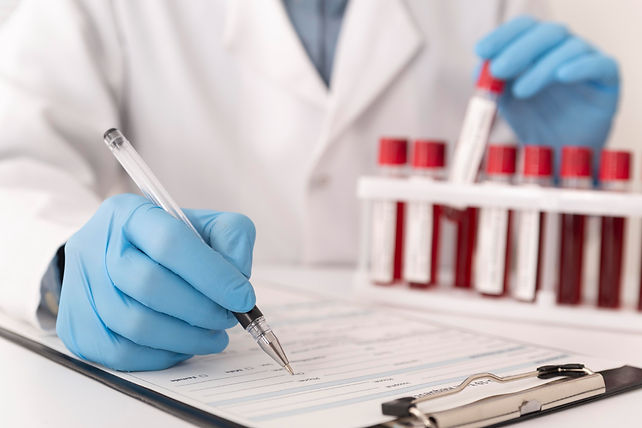
Blood Tests
Your blood offers many clues about your heart health. For example, high levels of "bad" cholesterol in your blood can be a sign that you're at increased risk of having a heart attack. And other substances in your blood can help us determine
if you have heart failure or are at risk of developing plaques in your arteries (atherosclerosis). We will arrange a blood test that is the most appropriate for you on the day after your consultation. The results will then be explained to you and sent to your GP.