
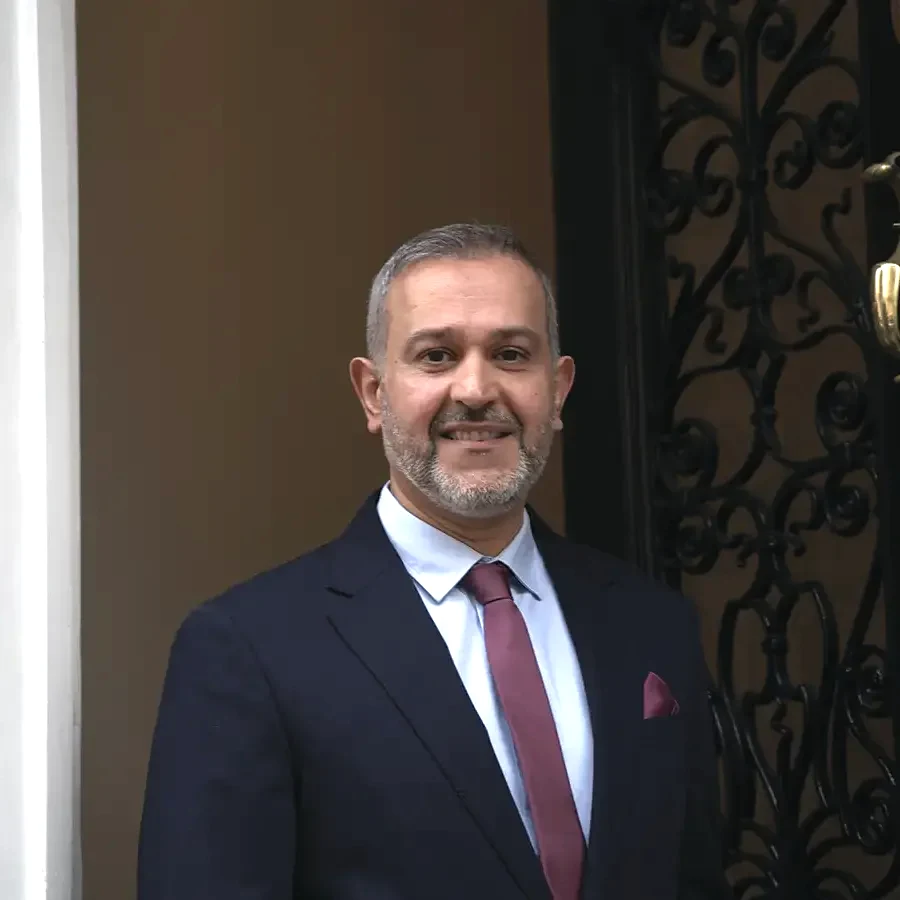
 Dr Omar Ali, consultant interventional cardiologist GMC 4728870
Medical review by Dr Omar Ali: 18 November 2026
Or if it comes with chest pain, fainting, or blue or grey lips or skin.
What it can mean
Feeling short of breath has many causes. Some come from the heart, others from the lungs, the blood or general fitness.
- Narrowed heart arteries (coronary artery disease)
- A weak heart pump (heart failure)
- Narrowed or leaking heart valves
- Heart rhythm problems such as atrial fibrillation
- Lung conditions, anaemia, or being out of condition
When to see a cardiologist
- You get breathless with less effort than before
- You are breathless lying flat, or wake at night short of breath
- Breathlessness comes with swollen ankles, palpitations or chest discomfort
- You have a family history of heart disease
How Dr Ali assesses it
After a full consultation and an ECG, the key tests are usually an echocardiogram to look at the heart's pumping and valves, and a blood test called NT-proBNP, which rises when the heart is under strain. If narrowed arteries are a possibility, a CT coronary angiogram or a stress test may follow.
Treatment
Treatment depends on the cause: for example, medicines for heart failure, treatment of narrowed arteries, or of a rhythm problem. If the heart is healthy, Dr Ali will tell you so, and point you to the right next step.
Questions
Can breathlessness be the only sign of a heart problem?
Yes. Some people with narrowed arteries or heart failure notice breathlessness before, or instead of, chest pain.
What is the NT-proBNP blood test?
It measures a hormone released when the heart is under strain. A normal result makes heart failure unlikely; a raised result means the heart should be looked at more closely.
Will treating heart disease help my breathlessness?
Yes, in most cases. When breathlessness comes from the heart, treating the cause usually makes breathing easier: for example opening a narrowed artery, repairing or replacing a valve, controlling an irregular rhythm, or medicines for heart failure. Dr Ali will explain how much improvement to expect for you.
Want to talk it through? Book a consultation with Dr Ali, or call 020 8087 4742.